

5 Autumn wellness hacks for feeling your best in the colder, darker months!
Autumn is here, the evenings are getting darker and darker, and staying inside in your cosy socks feels much more appealing than going outside. I feel it too! But our bodies still need taking care of, whatever the weather is doing.
The good news is that supporting your health through Autumn and Winter doesn’t need to be complicated. Here are my top five practical things you can do to give yourself the best chance at feeling good throughout the season.
1. Get as much natural light as you can
Especially in the morning! Ideally, get outside within the first hour of waking. Morning light helps anchor your internal body clock, which is involved in regulating sleep, hormones and a whole host of processes throughout the body.
Light levels outdoors are significantly higher than those indoors, even on a cloudy British morning.
For context, typical light levels look something like this:
Cloudy outdoors: 1,000–10,000 lux.
Sunny outdoors: 10,000–100,000 lux.
Indoor lighting: around 100–500 lux.
Even a grey British morning can give you considerably more light exposure than sitting inside!
How long should you spend outside?
As a rough starting point:
Sunny, bright day: 10–20 minutes.
Cloudy, overcast day: 30–45 minutes.
What about getting light through a window?
Glass blocks much of the beneficial blue light, so it really is important to prioritise time outside where you can. That being said, it’s still important to make the most of being near windows when you are inside where possible too! Daylight bulbs are another option. You can buy specific bulbs designed to provide brighter, daylight-like illumination. They can be useful, but they don’t fully replicate natural outdoor light.
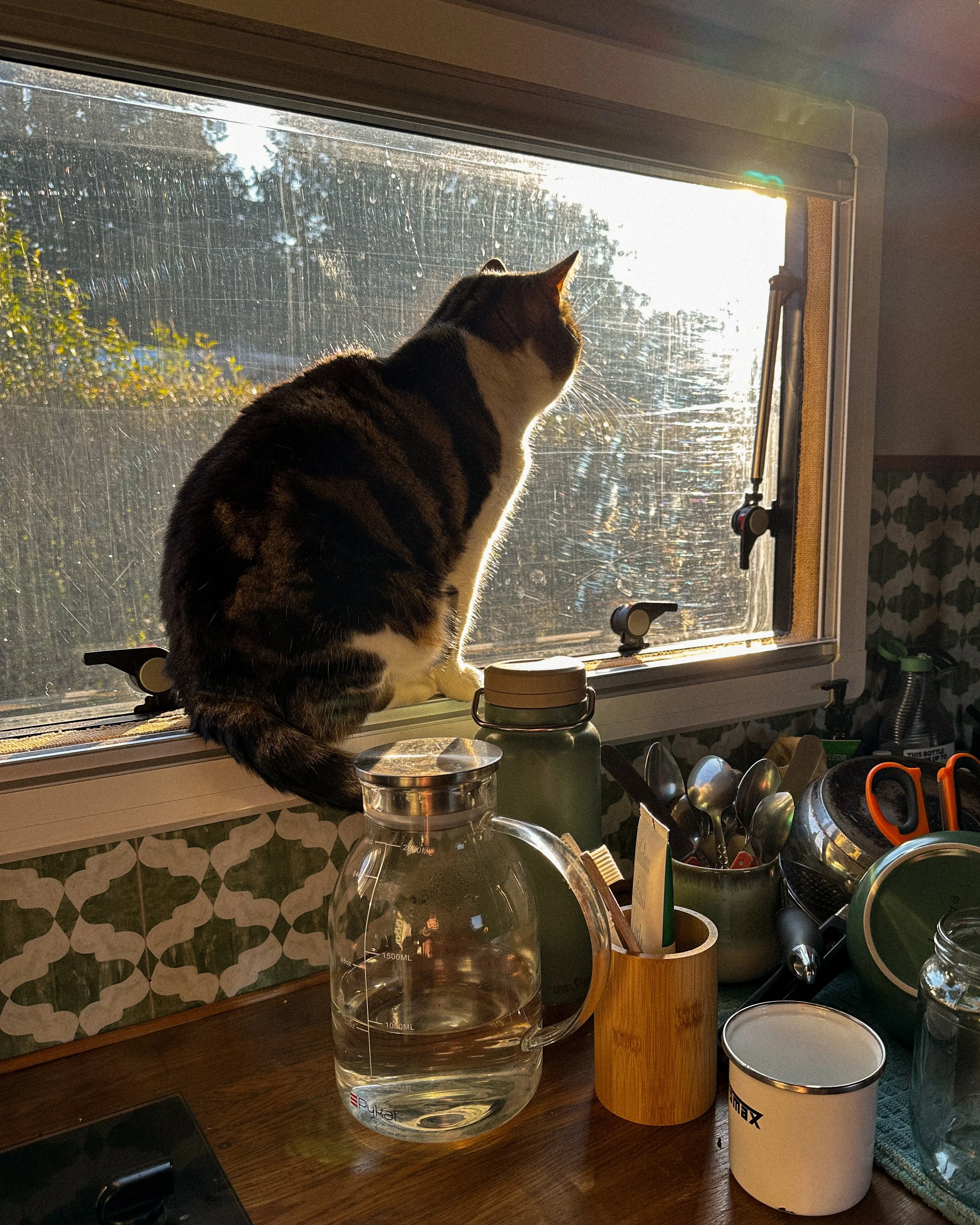
Easy ways to get more daylight this autumn and winter:
Have your morning tea or coffee outside.
Walk wherever you can.
Take your lunch break outside.
Take calls while out on a walk.
Make it a priority to get into nature on your days off.
Open your curtains fully to let in as much light as possible.
Sit next to a window at home or work.
Beeline for a window seat on public transport.
Small changes like these make getting outside a natural part of your day.
2. Get grounded
Grounding, sometimes called earthing, involves direct contact between your bare skin and the Earth, such as walking barefoot on grass or sand, touching a tree or wild swimming.
I will be the first to admit that I am a fair weather grounder. During the warmer months, you’ll rarely see me wearing shoes, but when it’s cold, wet and muddy? It becomes very easy to stay warm and dry in socks and shoes. In the winter months, I make the most of any dry, warmer weather (rare), so predominantly I rely on grounding devices because who are we kidding, English winters are wet and miserable…!
How long should you ground for?
Research into grounding is still in its early stages, with some small clinical trials reporting promising findings around stress, sleep and inflammation. Most studies looking at measurable changes in inflammation, blood viscosity, or cortisol rhythms used 30–40 minutes of grounding per session. Consistently grounding for 30+ minutes per day, even spread out, has clear benefits. The beauty of spending time barefoot outside is that it can also encourage you to slow down, get outdoors and connect with nature. Wins all round!
Benefits include:
Nervous system regulation
Decreased stress response
Increases in heart rate variability (HRV)
Increase in energy
Reduction in anxiety or tension
Anti-inflammatory effects
Improvement in circulation
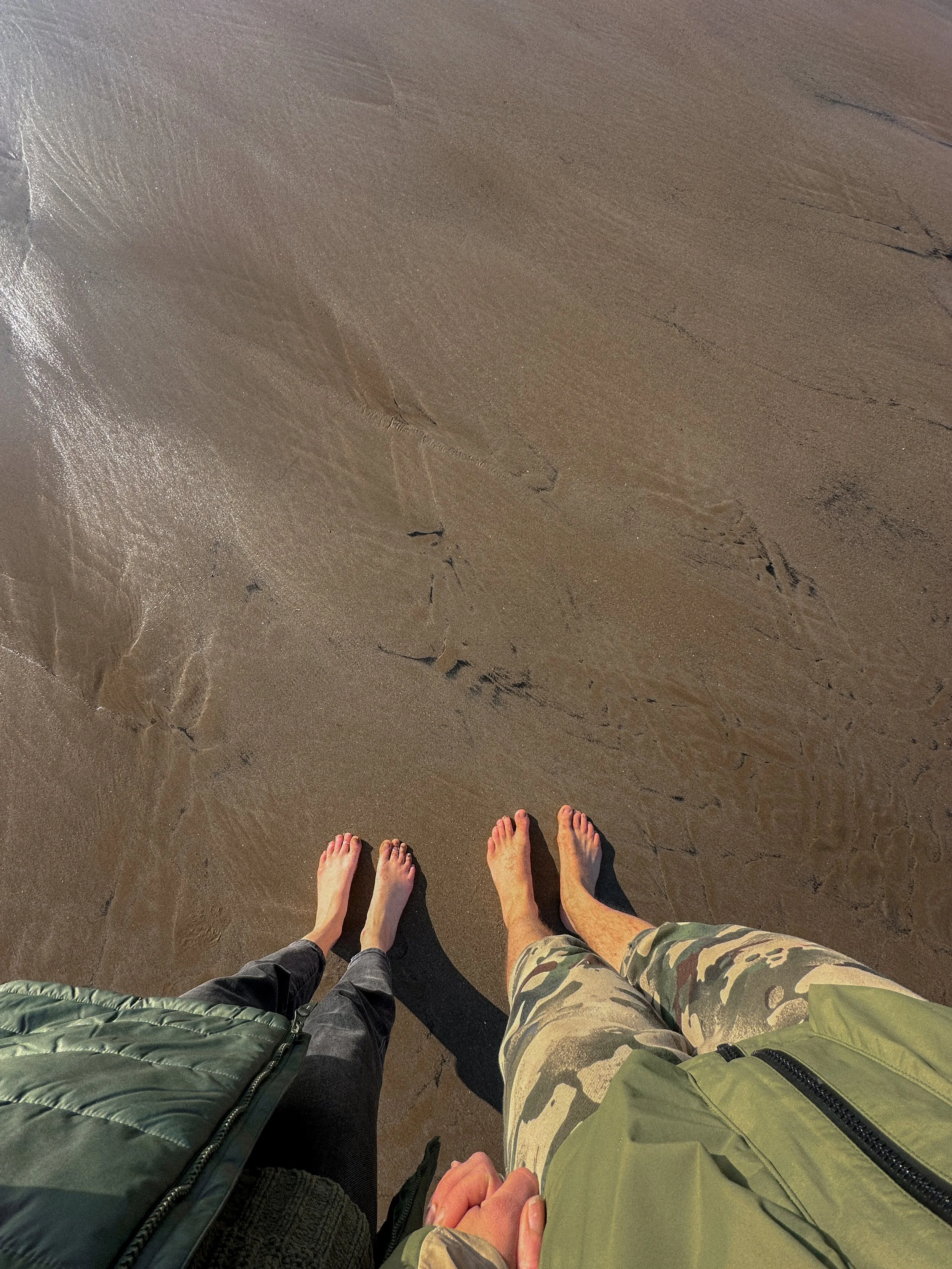
Ideas for getting grounded in autumn and winter:
Pair grounding with your morning day light exposure
Get short bursts of barefoot time throughout the day
Touch trees whenever you walk past them
Embrace the wet! Grounding is more effective when the ground is wet because water improves conductivity
Saltwater is one of the best natural conductors, which is why walking barefoot along the shore or going in the sea can feel especially energising yet calming. So, if you’re lucky enough to live near the beach, go for a swim!
Garden with bare hands in the soil
If you can’t get outside, grounding devices are also available. These include mats and sheets designed to connect to an electrical earth. I sleep on a grounding sheet all year round, and I also have a small mat that I use like a mouse pad to work on my laptop. My Earthing devices are from here, my good friends Be Grounded! Shopping through this link gets you 10% off and free shipping!
For more information on grounding, get cosy of an evening and watch The Earthing Movie. It’s free to watch on YouTube, and it is a lovely, wholesome and fascinating documentary.
3. Consider vitamin D supplementation
The NHS recommends everyone over the age of 4 take a vitamin D supplement between October and March. The Department of Health and Social care recommend supplementation all year if you spend most of your time indoors, you’re in a facility like a care home, you usually wear clothes that cover up most of your skin when outdoors and if you have dark skin. The NHS recommends 400IU per day (10mcg) to avoid disease. However, it’s important to note that “free from disease” and “in optimal health” are two different things. You will notice that most vitamin D supplements contain around 2,000-4,000IU per dose! Supplement needs vary, and it’s worth doing your own research into suitable dosing for you personally.
I personally have Vitamin D in the form of ‘calcifediol’, which is actually the chemical measured in your blood when you have your levels checked. This form is different from the most widely available form - cholecalciferol. In your body, cholecalciferol requires conversion into calcifediol by the liver. That means by taking D3 in the calcifediol form, it bypasses any slugish liver issues, which can inhibit absorption. I get it from Made by Daily (not an affiliate link - I have partnered with them before on content for instagram, but I am a paying customer!) They are experts in Vitamin D and always happy to answer questions.
4. Limit blue light in the evenings to protect your circadian rhythm
As the sun sets, its light waves go from blue to orange then red, which signals to our bodies it’s time to start winding down and producing melatonin to send us to sleep. Artificial blue light from devices disrupts this signaling. Think phones, TVs, laptops, LED lighting, appliance lighting etc. Limiting blue lighting from roughly an hour before sun set, helps maintain your internal body clock. Cellular processes which happen during the day start to slow down to conserve energy for repair and recovery, because the body switches to “maintenance mode” during the night
Processes that slow down:
Cellular metabolism & energy production: mitochondrial activity reduces as you don’t need high energy output for physical activity.
Digestion & nutrient absorption: gut motility slows and stomach acid production decreases. This is why it’s best to stop eating 2-3 hours before bed!
Cortisol production: your stress hormone naturally falls to its lowest at night.
Alertness & reaction time: brain performance declines, making concentration and decision making harder. Have you ever felt ‘drunk tired’?
Blood pressure & heart rate regulation: blood pressure and heart rate drop. It’s called “nocturnal dipping”, and allows your heart and blood vessels to recover from daytime stress.
Processes that increase:
Melatonin production: the body starts converting tryptophan into the “sleepy hormone”, helping you drift off into a deep, peaceful sleep.
DNA repair & detoxification: oxidative damage is fixed and the stability of your genome (all your DNA) is protected.
Immune activity: certain immune cells, like T-cells, become more active, strengthening your immune system.
Growth hormone release: peaks during deep sleep, stimulating tissue repair, muscle recovery, and fat metabolism.
Glymphatic system activation: your brain’s night time cleaning crew - similar to the lymphatic system - which washes out metabolic waste that builds up during the day.
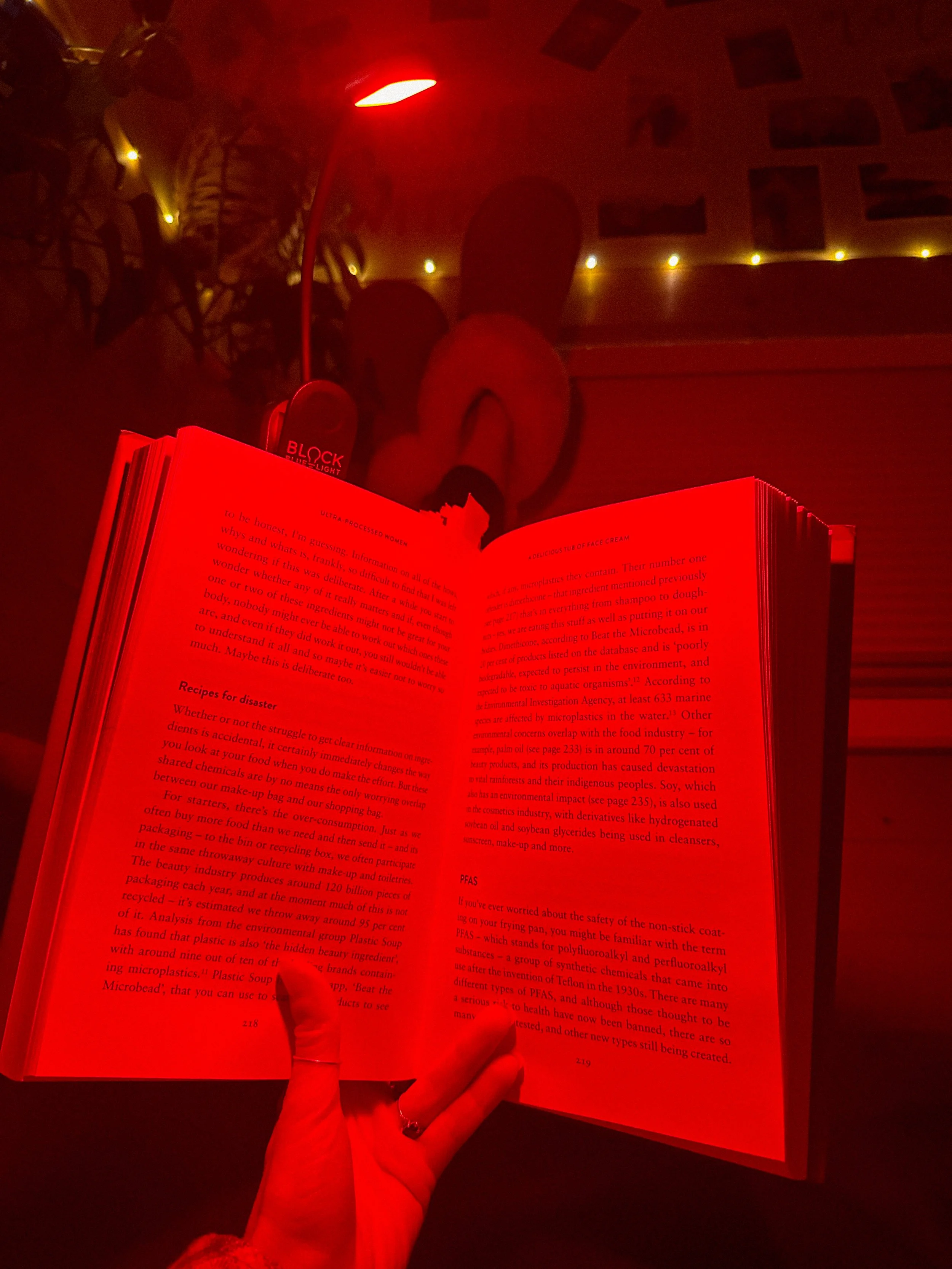
Protecting your circadian rhythm:
Device screens: a lot of mobile devices now have eye protection built in.
Set the screen to automatically switch to a yellow tone when the sun goes down
Make an accessibility shortcut to turn the screen red
Snap on and off screen protectors for computers and laptops. Occushield do these
Glasses: blue light blocking glasses can protect the light receptors in your eyes. Different coloured lenses filter out different light spectrums.
Red lighting: have evening lighting that’s red or orange. You can get bulbs, rechargeable red lights, red fairy lights, Himalayan salt lamps, red clip on reading lights. There are many options!
During the darker months, I wear yellow glasses when the sun goes down, and switch to orange ones 1-2 hours before bed. I also have a full spectrum reading light I use every evening. We then have 2 full spectrum bulbs in the living area which have been a game changer! I bought everything from Block Blue Light during sales (they have good Black Friday sales!) but shopping through the link provided gets you 15% off.
5. Keep moving
Movement not only supports your physical health, but it’s an amazing mood booster too, and with the lack of sun in the winter months, we need all the mood boosters we can get! You might think you need to join a gym or buy equipment, but you don’t have to do that if you don’t want to. Even just a 15 minute daily walk can make a huge difference, especially if you are not used to prioritising movement within your day.
There’s fascinating neuroscience behind this too! Your Default Mode Network (DMN), which is responsible for the story you tell yourself, can either help or hinder your progress here. What are you telling yourself? The classics include:
“I don’t have enough time”
“I’ve got too much to do”
“I hate exercise”
“I’m too tired”
Any of these sound familiar?
Your brain receives 11 million bits of information per second for processing. However, your conscious mind is thought to only process 50 bits per second. That means around 10 999 950 bits of information are being filtered out, purely based on your existing beliefs, past experiences and subconscious mind.
The good news! Your DMN can be rewired to start filtering out information to be in line with the person you want to be. So that 15 minute walk can be an amazing starting point for so much more. If you change your language along with making a commitment to do the walk, ie. “I have plenty of time for my daily walk”, “I feel much better physically and mentally when I make time to move my body”, not only will it become much easier for the walk to become a habit that feels effortless, you will start to create space in your life for more movement opportunities. Consistent actions, even small ones, chip away at your old autopilot. Each walk teaches your brain how good it is to swap sitting for moving, helping you feel better for longer.

Ideas for more daily movement:
Make use of thousands of free workout videos on Youtube
Combine time in nature, grounding and a walk. Three for the price of one!
Take a 10 - 15 minute walk around the block after eating in the evening
Take calls whilst walking
Walk short journeys instead of driving and take the stairs over escalators and lifts
Wind down before bed with a bed time yoga routine. Again, lots available on YouTube. If you get into a routine with it, I recommend the Down Dog yoga app - I have used this for over 5 years now! They cater for different abilities, all different types of yoga and even meditations.
And that’s it! She says like it’s no big deal… But I get it, sometimes health information can seem very overwhelming and impossible to incorporate into your life - that’s your DMN at work right there. But you have ultimate control over this! The best thing to do is to pick one thing and be very conscious of the language you are using to describe that change. It’s something you want to do, not have to do. This will start to snowball and create space for more positive change throughout your life. Remember: we do what we can when we can!
Love, Amy x